
Confession as Katabasis
How to escape the Abyss

In the 2021 film The Green Knight, the hero, Sir Gawain, after having consumed some ill-advisable mushrooms, slips and slides down a shale hill into a foggy and gloomy valley. There he witnesses shapes and specters, horrors and omens, all surrounding him. This is his lowest point. He doesn’t know if he can carry on.
This is the part of the Hero’s Journey known as the Abyss.
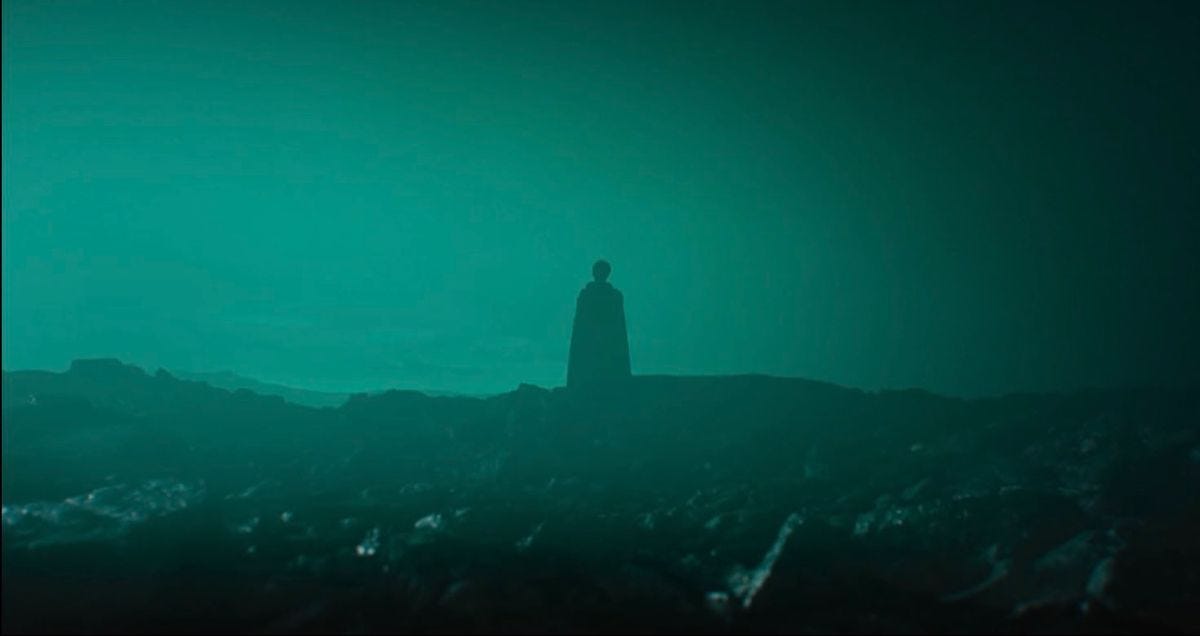
It is here where many stories end. For the hero is given a question that he’s heard before: Will ye go on? Will ye persevere? Will ye answer the call? He receives the Call to Adventure once more, much as he did in the beginning of the story. At the start of the story, the hero is stationary and is typically content in stasis. He is home, comfortable, and content. Or, he is miserable and stuck. Either way, he has no motion. No movement. No momentum.
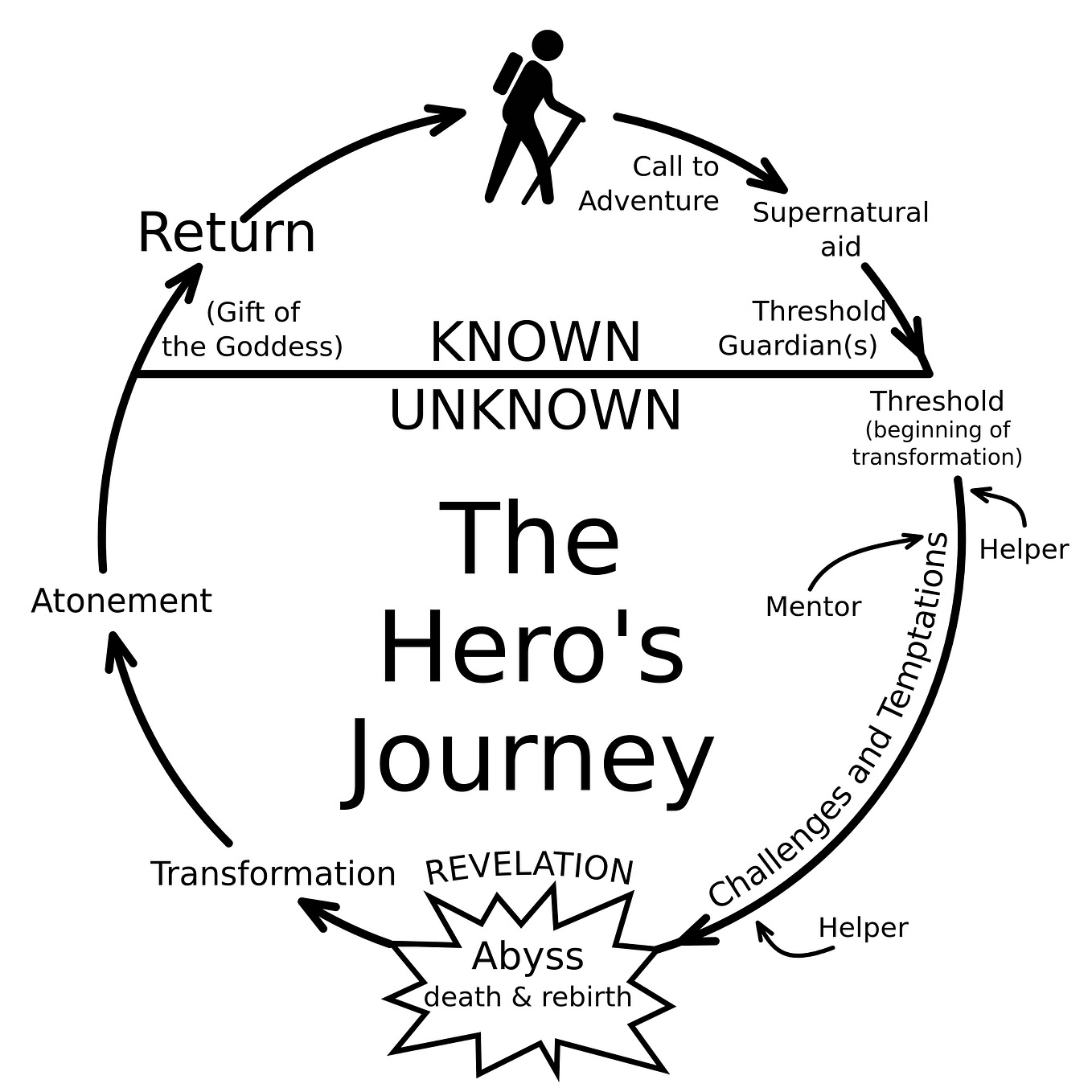
The same is true in the Abyss. The hero meet their low point. This is Frodo in Shelob’s pit in the heart of Morder; this is William Wallace in the dungeon on the night before his execution; this is Christ in the garden of Gethsemane. The Hero is brought low and made mournfully aware of his state, of what awaits him. Yet a question is posed to him by the Norns, by the fates, by the tale.
Will ye continue?
The Heroes that decline, and choose to lie down in the volcanic soil of the abyss, die there. These stories are the Shakespearean tragedies, the Norse myths, the heartbreaking films and stories that, while bleak and perhaps end on the down tempo, nevertheless have their place in our mythic headspace and deservedly so. Not every story needs a happy ending. In fact, most true stories are a mixture of both joyful and wounded, mirthful and weeping.
Yet, the Heroes that answer in the affirmative and brace themselves up, rising to their shaky legs, and pushing onward, will invariably escape the Abyss and the story will continue. He will have died and been reborn.
Now, before he can leave the Abyss, the Hero undergoes a transformation and offers atonement. This is Jacob walking with a limp after wrestling God, Frodo losing a finger to Gollum in order to be rid of the One Ring and living the rest of his life with a missing finger and a Morgul wound in his belly. The Hero triumphs, but he is fundamentally changed and he limps from the experience.
This is as far as I want to stretch Joseph Campbell’s Heroes Journey tool, for I have both met my needs by laying it out thusly and I realize my own ignorance as to the utter depths of this magical pool of analysis. Plus, anytime one attempts to utilize symbolism and extrapolation, there’s usually someone to whine and moan that they’re doing it wrong. So I’ll leave it there.
Enter: Confession
In the Christian tradition, there exists the sacrament of confession. This is the crucible of the Christian life - the moment of Katabasis, of the abyss, in which a Christian gazes into Galadriel’s pool and sees themselves and their path rightly. Once rightly apprehended, the Christian is able to confront the great heroic question:
Will ye continue?
If a Christian is to continue and avoid the entrapment of the sort of navel-gazing shame that the Apostle Paul writes of in 2 Corinthians, ultimately denying the call and dying in the Abyss, he must arise and confess. Repent.
As the awareness of our sin dawns upon us, so must our desire to be rid of it so also arise. To keep with the LOTR genuflections, call to mind the powerful image of Samwise Gamgee crouching over the prone form of Frodo Baggins. Frodo lies bloody and dry, broken apart on the rocks of Mount Doom. His eyes pierce the heavenly veil, and he sees time as a scroll open before him, peering back over his life in the Shire. He sees the fields, the golden sun bathing the lilies, the wind caressing the trees. Yet quickly, his mind’s eye transforms the golden day of the afternoon sun into the flaming hate of the eye of Sauron. The sun morphs and dissolves into the wicked and evil eye that condemns and sees.
So is our life under the gaze of our sin. The Christian, properly oriented, is as Frodo, gazing at his own life and at once seeing its beauty, then how quickly the beauty is soiled and burned away by the flame of his own wickedness. Then he must answer like Sam Gamgee upon hearing Frodo’s words uttered from under the blanket of his apocalyptic vision.
“Let us be rid of it! Once and for all.”
So the Christian enters into the confessional, he prostrates himself before the mercy seat of Christ, and he vomits his filth out. It cuts him, it wounds him, it hurts him. He will walk with a limp, but this is the cost of transformation. Of escaping the tragedy of life. Confession is the knife that cuts the cancer from the tissue. Forgiveness is the Lords, but grace is ours to be had in plentiful measure.
So stand up, brace yourself like a man, and confess. Escape the Abyss and heed the call. Rene Quinton says that the Hero is the one who transcends himself in the love of others. Heed the call and gird your loins.
BUILD THE WORLD

Lovely read. And very timely for me!
Edit: I’d like to add something I wrote the other day that seems to align with your own views of preserving truth, goodness & beauty — https://nevermoremedia.substack.com/p/love-the-antidote-to-nihilism?r=68t4&utm_medium=ios
It’s refreshing to see this similar mindset in others.